Why does fencing fail in Southern Spain? Strong sun can weather timber, salt air can corrode fittings and wind can loosen posts. Before replacing a fence on the Costa del Sol, check what failed first. That will help you choose the right panels, posts and foundations.
Key takeaways
- Sun can weather timber and its finish. Salt air can accelerate corrosion on metal fittings, and damp ground can contribute to timber decay.
- Check loose screws, brackets and hinges alongside leaning posts or damaged boards. These details can show where the fence began to fail.
- Wind loads solid panels and passes that load into the posts, so posts without a sound foundation, or too light for the panel, are where a fence often starts to lean.
- ColourFence panels are made from coated COLORBOND® steel. Ask for the test report and its scope if fire performance is part of your specification.
- Climar’s 25-year materials warranty covers qualifying defects in materials and manufacturing under its written terms. The installer’s workmanship terms are separate.
Why does fencing fail in Southern Spain?
Look for different signs of wear along the same fence. A sunny section may show a faded finish, while a shaded section may stay damp at the base and a seaward corner may show corrosion at the fixings.
Consider a sea-facing villa between Marbella and Estepona with a timber boundary beside a terrace. These are the places to look when the fence starts to move or the finish breaks down.
Strong sun can fade the finish and dry the boards. As the timber takes up and loses moisture, boards can move, split or warp.
Salt spray can accelerate corrosion on exposed screws, brackets and hinges. Check the condition of the fixings and any damaged coating or untreated cut edges.
Wind pushes on solid panels and transfers the load to the posts, fixings and foundations. A leaning post can indicate movement at the base or a problem with how the fence is supported.
Timber posts that stay damp at ground level can decay. Check the base of a leaning post before assuming the problem is in the panels above it.
Dry vegetation beside a fence also matters on plots exposed to wildfire. Seek site-specific advice if fire performance is part of the boundary specification.
If several sections are loose, check the posts and foundations before replacing boards or panels. Where the fence is fixed to a wall, have the soundness of the wall checked as well.
Coated steel avoids timber rot and splitting. Its durability still depends on the condition of the coating and fixings, the exposure and the installation.
If the boundary faces the sea, see our guide to fencing for a sea-view villa for questions to raise before choosing the fence.
Steel vs timber fencing on the Costa del Sol
Coated steel is an option if you want solid privacy and less routine upkeep than painted timber. On an exposed site, the choice of panel, post and foundations still depends on the conditions.
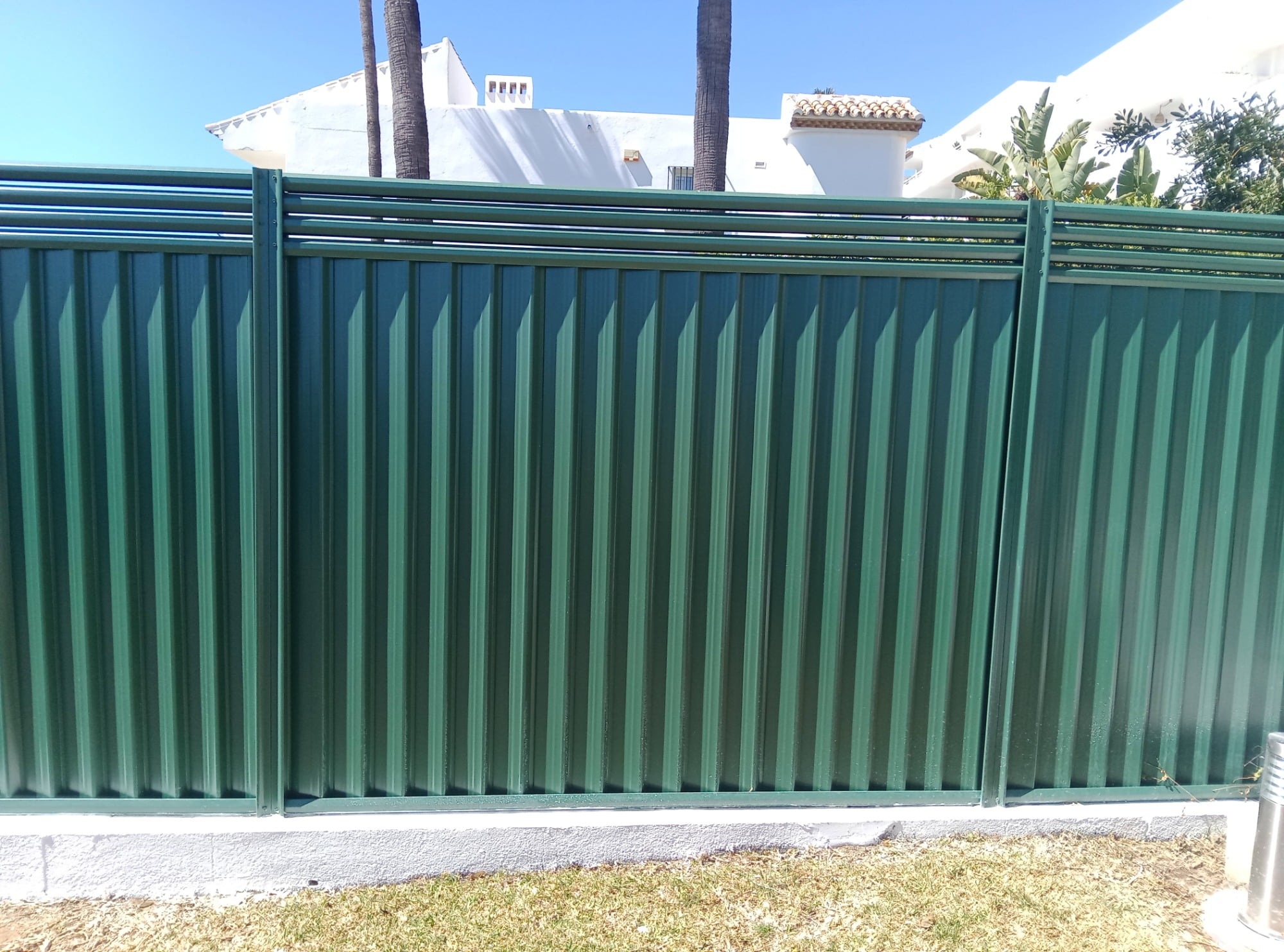
EasyFence supplies and installs genuine ColourFence steel fencing, manufactured by Climar Industries Ltd in the United Kingdom. The panels are made from COLORBOND® steel, which combines the strength of steel with protective coating layers and a baked-on colour finish. That finish is the part facing the sun and salt every day, so its condition largely decides how the fence ages.
If fire performance is important, ask for the manufacturer’s test report and confirm which components and configuration it covers. Avoid treating an individual material test as evidence that a boundary will protect a property from wildfire.
The wind assessment should cover the whole assembly, including panel dimensions, post spacing, fixings and whether the fence is ground-set or wall-mounted. Ask which tested configuration applies to your proposal before relying on any quoted wind figure.
Climar’s 25-year materials warranty applies to qualifying defects in materials and manufacturing, subject to the published terms and exclusions. The published terms exclude wind damage for wall-mounted installations and list restrictions for certain coastal conditions. Ask for the terms that apply to your Spanish installation. Our guide to certifications to check before you buy explains which documents to request.
A factory-finished steel fence generally needs no routine staining. Follow the manufacturer’s cleaning and care instructions. See our guide to fence upkeep on the Costa del Sol for maintenance considerations.
We see steel as a strong long-term alternative to timber, not a cure-all. It does not suit every site without checking: coastal and exposed locations call for the manufacturer's guidance and an assessment of the plot. Composite is available too, ordered from our supplier for each project, and steel, composite and wood compared sets the three side by side.
Fence installation for windy coastal properties
Wind loads a fence through its posts, so the posts decide how well the whole boundary stands up. Exposed coastal sites and open inland plots both need secure posts on correct foundations, and that is work for an installer who knows the ground.
For exposed sites, assess the ground, any existing wall, the height of the proposed fence and how much wind the boundary receives. These details determine which installation options are suitable.
Inland boundaries have their own exposure. Hillside villas and country properties can take hard gusts with no buildings to break them, and the same rules apply. For those plots, our article on fencing rural land in Málaga is a useful next read.
EasyFence provides professional installation from Nerja to Gibraltar and inland across Málaga province, including Málaga, Marbella, Estepona and Fuengirola. We fence villas, gardens, terraces and pool areas, and we supply and install both steel and composite, or supply only if you prefer.
The next step is simple. Request a free fencing quote through the quote form and tell us about your boundary, where it sits and what it needs to do. If you would rather talk, telephone and WhatsApp are open to you as alternatives. You can also read what happens after you ask for a quote before you decide.
Frequently asked questions
Why does a wooden fence deteriorate so quickly near the coast?
Sun can dry and weather boards, salt air can corrode hardware and damp ground can contribute to decay at the base of timber posts. Check the fixings and post bases as well as the boards.
Does steel fencing rust near the sea?
Salt exposure can accelerate corrosion, particularly where coatings are damaged or edges are exposed. Ask about the manufacturer’s coastal guidance for your property.
Does the 25-year guarantee cover storm damage or corrosion?
The warranty covers qualifying manufacturing and material defects under Climar’s terms. Ask for written confirmation for your site, especially for coastal exposure, wall-mounted fencing or storm damage.
What should I check about fire performance?
Ask for the manufacturer’s report for the proposed product and check exactly which parts of the fence and which test conditions it covers. For wildfire risk, seek advice that takes the whole property into account.
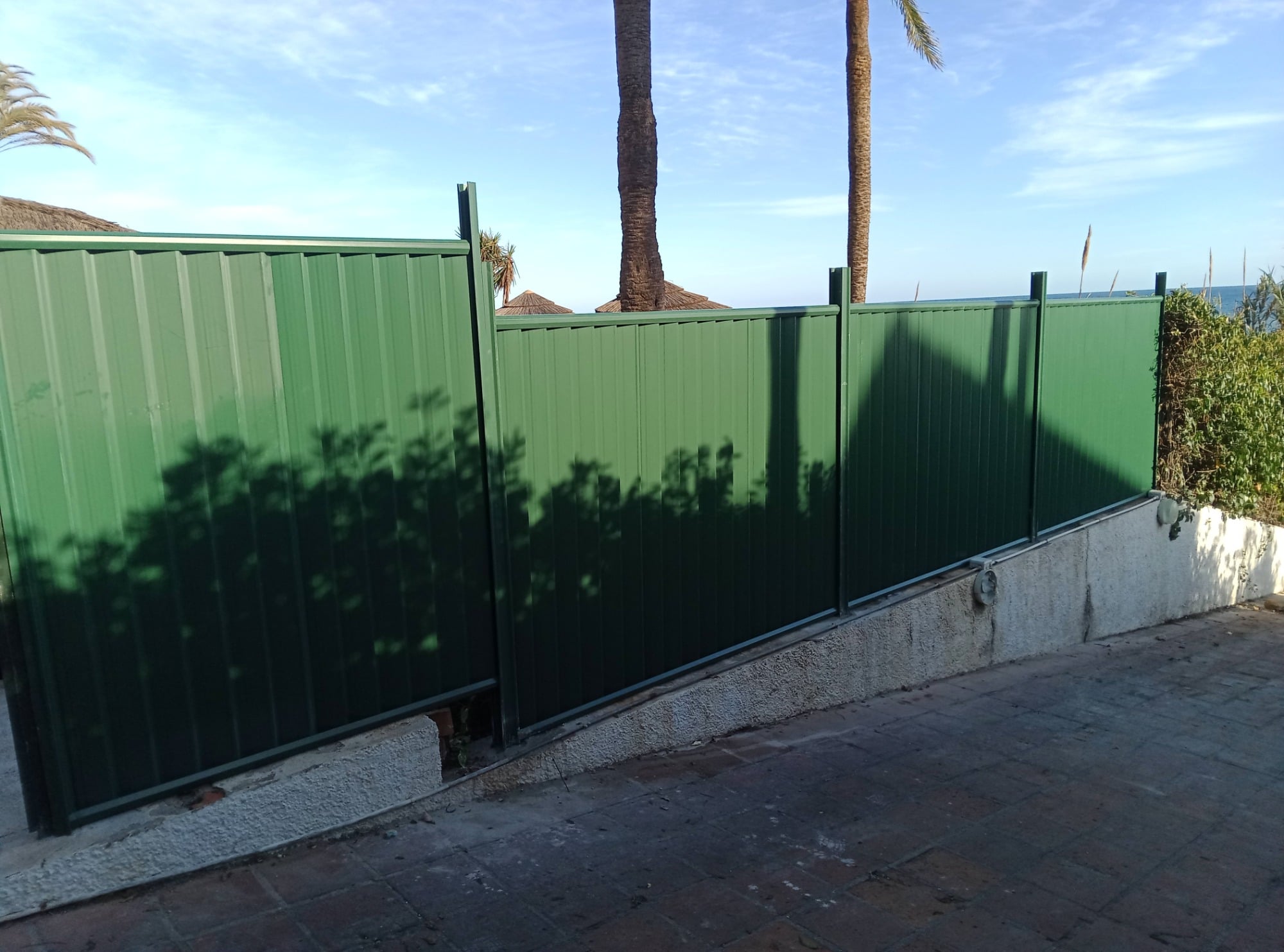
Which areas does EasyFence install in?
We install professionally from Nerja to Gibraltar and inland across Málaga province, including Málaga, Marbella, Estepona and Fuengirola. The quickest way to start is the free quote form on our website, with telephone and WhatsApp as alternatives.